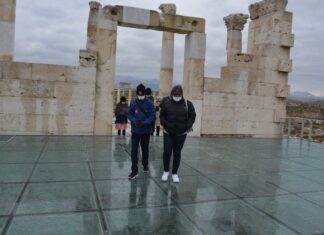
Ottoman Trade and the World Economy
Between 1750 and 1815, the Ottoman Empire became increasingly connected to the world economy. By the second half of the nineteenth century, several factors...
Early Ottoman Documents and Mount Athos
For the earliest Ottoman documents concerning Mount Athos, scholars often refer to the work of G. Salakides. His study, Sultansurkunden des Athos-Klosters Vatoped aus...
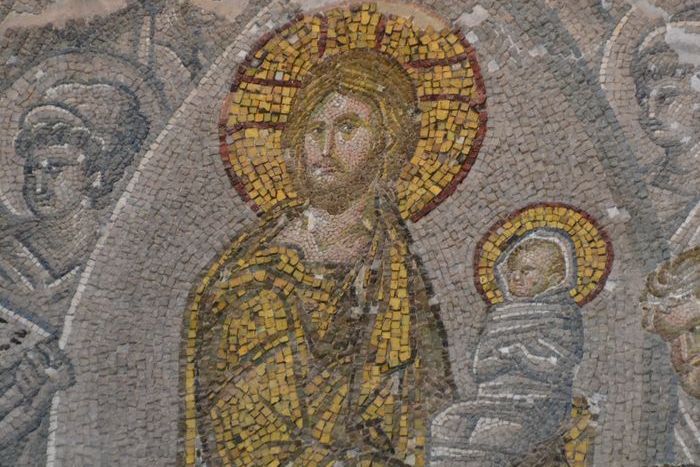
Postmortem Lives of Byzantine Images
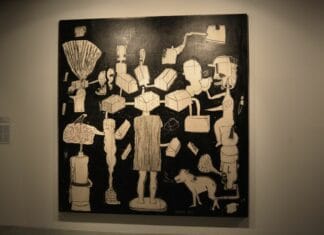
The icons preserved today in Turkish museum collections do not form a completely homogeneous group. They differ in style, quality, date, and place of...
Some indication that Gundila
The war dragged on, and at some point Totila returned; we have some indication that Gundila lost land again. After the war was over...
Totila was smart
Totila was smart, strong, and patient, and so his forces began to recruit directly from the other side. There was little difference between the...

Armenians under the sword
“For the same reason Crassus risked it several hundred years ago the hope of covering himself with glory with a sudden blow at the...

Amalasuntha’s death gave Justinian the pretext
And so in 535, Amalasuntha’s death gave Justinian the pretext he needed—supposed instability and illegitimacy—to set his fleets on the water again, this time...
Inherit the kingdom and build a temple
‘It was no more than he deserved for seeking to destroy his father.”
“No doubt,” Dacius agreed. “But the Jews have another explanation. They claim...
The Rock Sanctuary of Yazılıkaya
A Sacred Place Near Hattusha
The Yazılıkaya rock sanctuary is located about one mile from Hattusha, the ancient capital of the Hittite Empire. This place...
Early Cultural Connections in Anatolia
Early Buildings and Trade
During ancient times, Anatolia was closely connected with other advanced cultures like those in Mesopotamia. Pottery from the Ubaid period (a...